Physical Address
304 North Cardinal St.
Dorchester Center, MA 02124
Physical Address
304 North Cardinal St.
Dorchester Center, MA 02124


You woke up. Not in the gentle, incense-scented way the retreat brochures promised, but in the way that leaves you standing in the wreckage of a life that used to fit. The friends drifted. The job felt hollow. The music went quiet. Conversations that once warmed you now feel like glass slid between you and everyone you love. And somewhere in the small hours a question arrives that you do not like: what is wrong with me?

There is a question that arrives, sooner or later, in the inbox of anyone who writes about consciousness and the afterlife. It usually comes quietly, from someone in real pain, and it asks some version of this: if consciousness continues after death, what happens to someone who ends their own life?

There is a strange moment that happens to almost every programmer who reads spiritual literature. Somewhere between the Ra material and a design patterns textbook, the two start to rhyme. Concepts that mystics spent centuries wrapping in poetry suddenly look like architecture diagrams. The soul begins to resemble a class definition. Reincarnation starts to look like session management. The afterlife reads like a well-designed distributed system.

In the late nineteenth century, a Russian-born mystic managed to unite Catholic clergy, Anglican bishops, and American revival preachers in a single shared conviction: that her writing on Jesus was dangerous. Helena Petrovna Blavatsky did not deny Christ. Denial would have been unremarkable in an age of confident materialism. What she did was stranger...
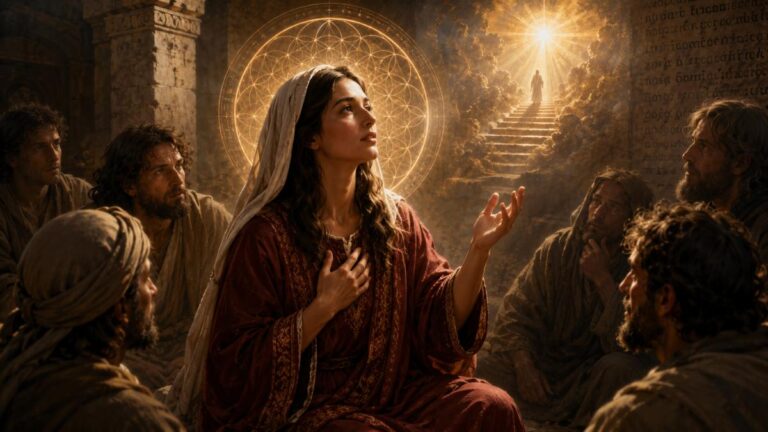
Most people carry a version of Mary Magdalene assembled for them by two thousand years of institutional curation: the forgiven sinner, the loyal mourner, the first witness at the empty tomb. It is a moving portrait. It is also a fraction of the story.
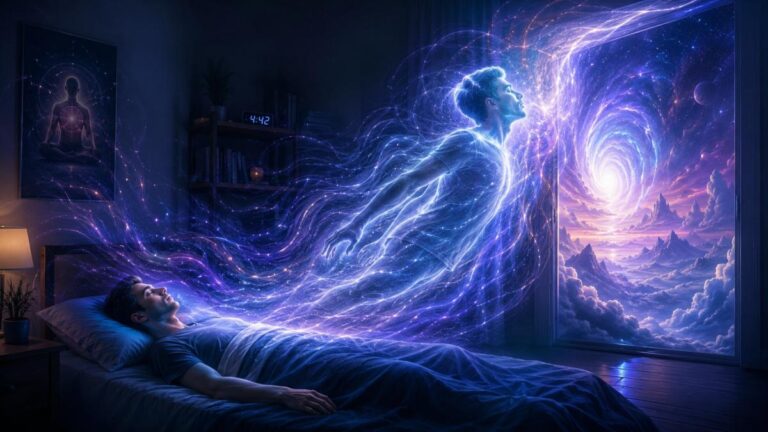
If you have read anything about astral projection, you have almost certainly come across the vibrational state, usually mentioned in passing as a curious sensation that shows up shortly before separation. What rarely gets said clearly is
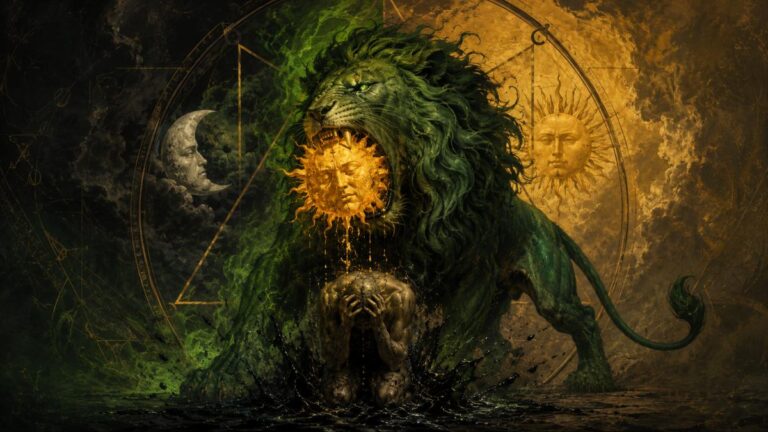
Shakespeare gave envy its most famous costume when Iago warned of the green-eyed monster. What almost nobody notices is that Renaissance occultists were already working with a green beast of their own, and theirs was not a warning. It was an instruction. In alchemical manuscripts from the same era, a green lion appears again and again, jaws locked around the sun, swallowing it whole. The image looks like catastrophe. The alchemists insisted it was the beginning of gold.

Open any meditation app and you will find the same promise repeated in soothing pastel tones: less stress, better sleep, a calmer commute. The pitch works. The global meditation apps market was valued at around 2.2 billion dollars in 2025 and continues to climb as millions of people reach for their phones to find a moment of peace.

Chronic pain has a way of shrinking a life. When discomfort lingers for months or years, it stops being a signal and becomes a resident, coloring sleep, mood, relationships, and the simple willingness to move through a day. For a long time the standard answers were pharmaceutical, and for a long time those answers carried a heavy cost. So it is worth paying close attention when a practice as old and as freely available as meditation turns out to hold up under rigorous scientific scrutiny.

You already own the vehicle you will use after death. That is the startling claim at the heart of both Theosophical and Rosicrucian teaching, and it turns the popular image of the astral body on its head. Most people who have heard the term at all think of it as a ghostly double, something you slip into for a night flight during an out of body experience. The older esoteric traditions saw it as something far more consequential: a subtle anatomy that records everything you are, carries the essence of your experience through death, and hands the blueprint to your next incarnation.